ULTIMATE Life Coaching
The Work We Were Born to Do: follow the joy
If something feels missing, listen. Find what you enjoy, then test the work you love, step by step.

ⓘ Photo
Image courtesy of © Aaron Burden / UnsplashHave you ever been on holiday, enjoying the fruits of your work, and felt a knot of fear about going back? That inner voice may be your greatest guide. Here is how to find the work you were born to do, and how to try it safely.
Miami has always been a city of people who turned what they loved into a living: Cuban bakers on Calle Ocho, muralists in Wynwood, chefs, musicians, cigar rollers and designers.
The last evening of the holiday: the sun low and golden, the suitcase half packed, and a small knot tightening under your ribs at the thought of Monday. If you know that knot, this column is for you.
Sometimes how we look on the outside feels a million miles from how we feel inside. If something feels missing, now is the time to stop and listen. No amount of success will quieten that inner voice, but listened to carefully, it can become your greatest guide.
We often live in reverse: chasing more money and more things, so we can do more of what we want, so that one day we can be happy. What if we started with what makes us happy instead?
Think of an insurance claims manager who finds her work ‘sensible and grey’. Picture her on a Saturday walk through the Wynwood Walls and then along Calle Ocho in Little Havana, with one task: write down every place where she wants to stay longer. She lingers at the murals, but she stays longest in a small bakery, watching the guava pastries come out of the oven, remembering a grandmother who baked.
Weekend mornings baking pastelitos for a café or two could be the start, with a small shop of her own as the dream. Her grandmother would be pleased, and slightly critical of her pastry.
Or picture a bookkeeper who has collected vintage posters since college. One rainy Saturday she visits The Wolfsonian–FIU on Washington Avenue, which explores how design shaped the modern world, from posters to furniture. She stays three hours. On the drive home she wonders aloud whether design could be more than a hobby.
Find the threads
Think back to childhood: what did you enjoy and do well? Building things, organising everyone, drawing, looking after animals? Then do the same for the last ten years, and for the last year. Finally, finish the sentence “I am someone who enjoys…” twenty different ways. Don’t stop at ten: the best answers come late.
Read the list back and circle the words that keep returning: helping, solving, making, leading, being outdoors. That’s your signpost. Ask friends when they see you happiest, too; others often see our gifts more clearly.
Notice when time disappears
Most of us know the feeling of being so absorbed that we look up and an afternoon has gone. It is widely seen as a sign of work that suits us. Notice when it happens.
What gives us joy in life is likely to be the signpost to the work we were born to do.
Test before you leap
You don’t have to resign tomorrow. Talk to people who already do the work and ask what an ordinary day is really like. Volunteer, take an evening class, shadow someone, start it as a weekend project. Some experiments will feel like coming home; others will teach you what you don’t want, which is just as useful.
A compass, after all, doesn’t tell you where to go. It only tells you which way is north. The journey is still yours to choose.
Try this today
1. This week, write your twenty “I am someone who enjoys…” answers and circle the threads.
2. Ask two friends: “When do you see me at my happiest?” Write down exactly what they say.
3. Book one small experiment for this month. Follow the joy: it is very likely the signpost to the work you were born to do.
A question to sit with
What would you happily do on a free Saturday, without being asked and without being paid?
Plants grow towards the light, sometimes leaning right across the windowsill to reach it. Let yourself lean towards what lights you up. It is very rarely the wrong direction.
Notice where you want to stay longer when nobody is hurrying you. The work that brings you joy is often hiding in a family memory.
More in depth
 The back storyCuban Miami: Calle Ocho and the cafecitoCafecito, dominoes and salsa: Cuban culture shapes Miami.
 The back storyLittle windows, strong coffee: Miami’s café culture, the back storyFrom the ventanita to the Wynwood roastery: how Miami learned to take its coffee small and sweet.
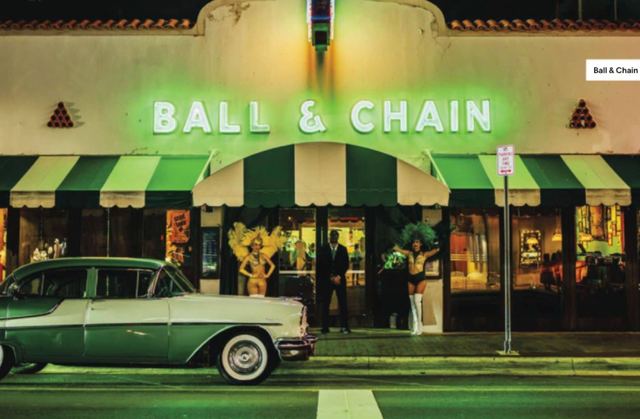 The back storyRum, rhythm and rooftops: Miami’s drinking culture, the back storyFrom Prohibition’s end in Key West to Calle Ocho cantineros and a 22nd-floor terrace in Brickell.